Unsafe electrical panels
Is Your Electrical Panel Unsafe?
How to identify the panel brands with well-documented safety concerns, what the problems are, and what to do if you have one.
Most electrical panels quietly do their job for decades. A handful of brands installed in Southern California homes from the 1950s to the 1980s are different: independent testing, fire investigations and court cases have documented real problems with how they perform. These are the panels insurers ask about, home inspectors flag, and we replace most often.
Here is how to find out what you have. Open the panel door (never the inner cover) and look at the label and the breakers. If you are not sure, take a photo and send it to us, or schedule a free inspection.
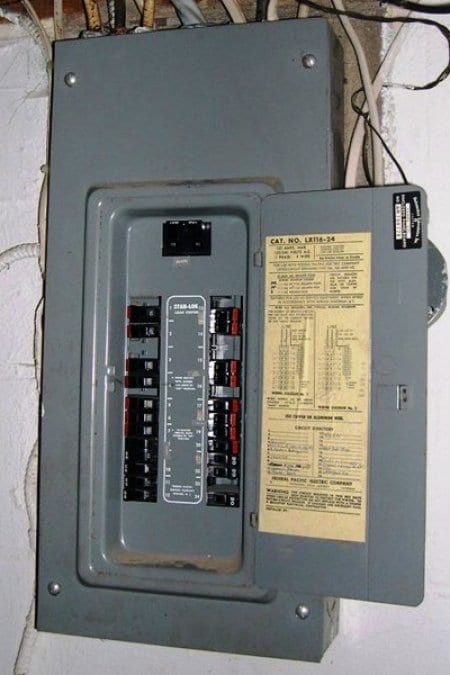
Federal Pacific (FPE) Stab-Lok
Look for “Federal Pacific” or “FPE” on the door and thin breakers labeled Stab-Lok, often with red or orange tips. Independent testing by Dr. Jesse Aronstein documented breaker failure rates of 60 to 70 percent in some tests.
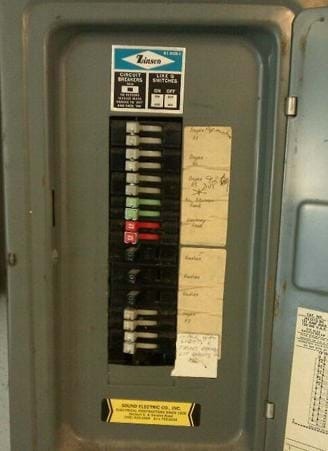
Zinsco, Sylvania-Zinsco and GTE-Sylvania
Look for colorful breaker handles and “Zinsco,” “Magnetrip” or “Sylvania” labels. The aluminum bus bars can corrode, and breakers can melt to the bus so they no longer trip.

Pushmatic and Bulldog
Look for push buttons instead of toggle switches. The mechanisms stiffen with age, most have no main breaker, and replacement breakers are no longer made.
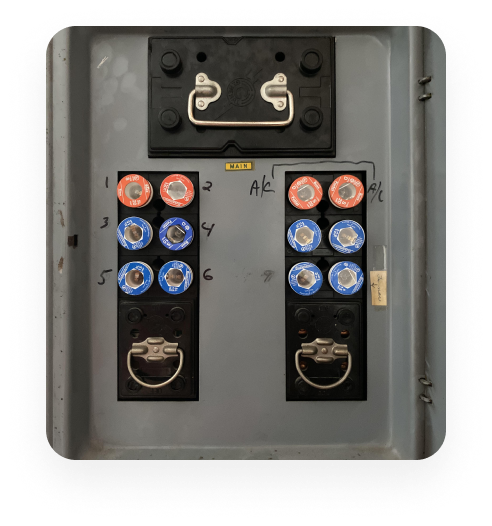
Fuse boxes
Screw-in fuses usually mean a 30 to 60 amp service, no modern protection, and a real risk of the wrong size fuse being installed.
Insurance
Why insurers ask about your panel
Many insurance companies will not write or renew a homeowners policy on a home with a Federal Pacific or Zinsco panel, and more are asking about Pushmatic panels and fuse boxes as they age. In California, tighter underwriting after years of large fire losses has made these questions more common.
Selling a home
Panels and home sales
California’s SB-382 requires sellers to advise buyers to have the home’s electrical system inspected. It does not require you to replace anything, and it sets no deadline. In practice, an older panel often comes up in the buyer’s inspection, and replacing it before listing can remove a negotiating point.
Other brands
Challenger, Wadsworth and other older panels
Some Challenger breakers were subject to actual CPSC recalls, including about 9,000 GFCI breakers in 1988 and about 1,000 Challenger panels recalled by Eaton in 2014. Those concerns are model specific, and not every Challenger panel is unsafe.
Wadsworth panels come up in inspections too, mostly because of their age. For panels from mainstream manufacturers, age, damage and capacity matter more than the name on the door. That is exactly what a free inspection checks.
FAQ
Unsafe panel questions
Should I turn breakers off and on to test them?
No. Testing breakers safely takes the right equipment, and a Federal Pacific or Zinsco breaker can fail in a way you cannot see by flipping it. Let a licensed electrician check it.
Is it safe to keep using my panel until I replace it?
Many of these panels have worked for decades, and the facts are serious enough without exaggerating them. If you see heat, scorching, buzzing or a burning smell, call us right away. Otherwise, schedule a free inspection and decide with real information.
Can you just replace the bad breakers?
For Federal Pacific and Zinsco panels, the concerns involve the breakers and the bus bars together, and genuine replacement parts are not made anymore. Replacing the panel is the reliable fix.
Free, no obligation
Schedule your free panel inspection
A licensed Tradesman electrician will look at your panel, explain what they find in plain language, and tell you honestly whether it needs replacing, repairing, or nothing at all.