
The car arrives before the electrician, which is how most of these calls start. Someone has ordered an electric vehicle, delivery is a few weeks out, and the question is whether the home can charge it.
Sometimes the answer is straightforward and the existing electrical panel has room. Often it does not, and the reason is simple: a Level 2 EV charger is one of the largest continuous loads a house will ever carry, and most Orange County homes built before the 1990s were never wired with anything like it in mind.
Here is how to work out what your home needs before the car shows up. Our step by step guide to electrical panel replacement covers what the work itself involves.
What an EV Charger Actually Draws
Charging levels matter, because they determine whether this is an easy job or a real project.
Level 1 is the cord that comes with the car, plugged into a standard household outlet. It adds roughly three to five miles of range per hour. No panel upgrade, no electrician, and for a short commute it can genuinely be enough.
Level 2 is what most people mean by a home EV charger. It runs on a 240 volt circuit and typically needs a 40 to 60 amp breaker, delivering somewhere around 25 to 40 miles of range per hour. This is the level that requires real capacity.
The number that matters is the continuous load. Electrical code requires a continuous load to be calculated at 125 percent of its rating, so a 48 amp charger is treated as 60 amps of demand. On a 100 amp service already running an air conditioner, a dryer, and an electric water heater, there may simply not be 60 amps left.
That is the whole question: not whether the panel has a spare slot, but whether the electrical service has spare capacity.
The Load Calculation
A load calculation is the piece of work that answers this properly, and it is worth insisting on rather than accepting a guess.
An electrician totals the demand from everything in the home: heating and cooling, water heater, range, dryer, general lighting and receptacle load, pool equipment, and any other fixed appliances. That total is compared against the service size. Whatever is left is what you have available for EV charging.
The results usually fall into one of three outcomes.
There is capacity, and the panel has room. The best case. The electrician runs a dedicated circuit to the charger location and the job is a straightforward install.
There is capacity, but the panel is physically full. The service can take the load, but there is no slot for the breaker. A subpanel often solves this, generally $1,300 to $2,700, and is cheaper than a full service upgrade.
There is not enough capacity. The service itself is the constraint. This calls for a panel upgrade, most commonly a 100 to 200 amp service upgrade.
There is also a fourth case worth naming. If your home has a Federal Pacific or Zinsco panel, the conversation changes. Those panels have documented safety concerns independent of capacity, and adding a large continuous load to one is not something a careful electrician will do. In that situation the panel replacement comes first regardless of what the load calculation says.
When an EV Charger Needs a Panel Upgrade
The likely answers, before anyone measures anything:
- 100 amp service with central air conditioning and electric appliances. An upgrade is probable.
- 100 amp service with gas heat, gas water heater, and gas range. There may be room. The calculation decides.
- 200 amp service. Usually fine for one charger, and frequently for two.
- Panel already full of tandem breakers. At minimum a subpanel, and often a sign the house outgrew its service some time ago.
- Planning two EVs, or an EV plus a heat pump, or an EV plus an ADU. Plan for 200 amps.
Homeowners are often surprised that the deciding factor is the rest of the house rather than the car. Two identical vehicles in two identical driveways can produce completely different answers depending on whether the kitchen runs on gas or electricity.
Load Management as an Alternative
If the calculation comes up short, an upgrade is not always the only route.
Many modern EV chargers support load management, sometimes called power sharing or dynamic load balancing. The charger monitors total household demand and throttles charging when the house is drawing heavily, then returns to full speed when demand drops. Because most charging happens overnight when little else is running, the practical effect on daily range is often minimal.
This can let a home add EV charging without a service upgrade. It is not right for everyone. If you need a full charge in a narrow window, or you are adding other large loads anyway, the upgrade is the better long term answer. But it is worth asking about before committing to the larger job, and a good electrician will raise it.
What It Costs
Panel and EV charger prep in Orange County generally runs $3,000 to $5,500, and specials are sometimes available. A 100 to 200 amp service upgrade falls in the same $3,000 to $5,500 range. A subpanel installation runs $1,300 to $2,700. City permits add roughly $50 to $250.
Actual pricing depends on multiple factors including panel age, circuit count, stucco or siding repair needs, permit requirements, overhead versus underground service, and site-specific conditions. A free inspection is the only way to get an accurate figure for your home.
Costs are driven by:
- Distance from the panel to the charger location. A charger on the garage wall beside the panel is inexpensive. One at the far end of a detached garage means a long conductor run.
- Number of circuits in the existing panel
- Stucco or siding repair where the panel is replaced
- Permit complexity, which varies by city
- Panel location and accessibility
- Overhead versus underground feed. Overhead costs more, because of the riser, weather head, and wires.
- Grounding requirements, often outdated in homes of this age
Timing, and Why It Matters
This is the part that catches people out. If a panel upgrade is required, Southern California Edison typically needs around 90 days to approve and complete a service change. Homes in SDG&E territory should plan for three to six months.
The installation itself is usually a single day. The waiting is the utility.
So if your vehicle is arriving in six weeks and your home needs a service upgrade, the charger will not be ready. Level 1 charging from a standard outlet covers the gap for most commutes while the upgrade proceeds. It is not ideal, but it works, and it is a great deal better than discovering the timeline after the car is in the driveway.
The practical advice: get the load calculation done as soon as you order the vehicle, not after it arrives.
Electrical Panel Capacity and What It Means
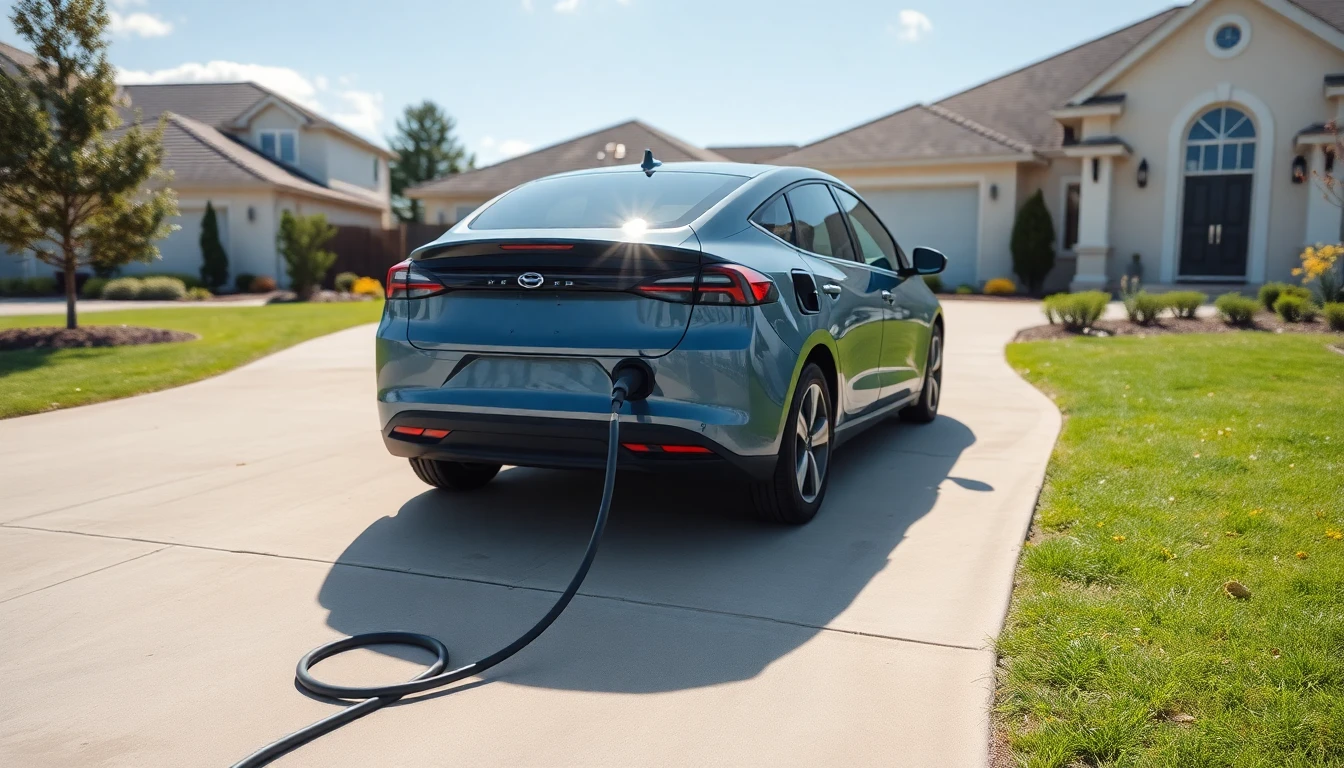
Panel capacity is the phrase that causes most of the confusion here, because it describes two different things that people tend to merge.
Service capacity is how much power the utility delivers to your home. It is the amperage rating of the electrical service, usually 100 or 200 amps in Orange County. This is the hard limit.
Physical capacity is how many breaker spaces the panel has. A panel can be physically full while the service still has plenty of headroom, or the reverse.
An EV charger needs both. It needs a spare breaker position, and it needs the service to have enough unused amperage to carry a continuous load. Running out of either one stops the install, and they have different solutions. A full panel with spare service capacity is solved by a subpanel. A maxed out service needs a panel upgrade.
This is why the answer to whether you need a panel upgrade for EV charging cannot be given over the phone. Two homes with identical 100 amp panels can produce different answers depending on whether the heating and cooking run on gas or electricity.
How to Know If You Need a Panel Upgrade
There is a rough sequence worth walking through before anyone visits.
Check the main breaker. The number printed on it is your service size. 100 means 100 amps. 200 means you are probably fine.
Count the empty spaces. Look for unused breaker positions. None available means at minimum a subpanel.
Look for tandem breakers. Two thin switches occupying one slot means the panel has already been stretched past its design.
List the large electrical loads. Air conditioning, electric water heater, electric range or oven, electric dryer, pool pump, spa. The more of these that are electric rather than gas, the less headroom there will be for EV charging.
Note the panel brand. Federal Pacific, Zinsco, Pushmatic or Bulldog changes the conversation. Those panels should be replaced before any large load is added, regardless of available capacity.
That gives you an informed expectation. The load calculation confirms it properly, because the real answer depends on code-defined demand factors rather than simply adding up appliance ratings.
What Electrical Upgrades for EV Charging Involve
If the assessment shows you need a panel upgrade before installing an EV charger, here is the work in sequence.
Load calculation and design. Establishes the service size needed and where the charger circuit will run.
Permit. Pulled with your city. Panel upgrades and EV charger circuits both require permits and inspection in Orange County.
SCE application. Submitted early, because the utility timeline governs everything else. Around 90 days is typical for Southern California Edison, and three to six months for SDG&E territory.
Panel upgrade. The electrical panel, meter base, and service conductors are replaced. Usually a single day with power off.
EV charger circuit. A dedicated 240 volt circuit is run from the new panel to the charging location, terminated, and the charger mounted and tested.
Inspection. The city signs off and the permit closes.
Where capacity already exists, only the last three steps apply and the whole thing is considerably simpler. That is the outcome worth checking for before assuming the larger job is necessary.
Common Questions
Can I install a Level 2 EV charger on a 100 amp panel?
Sometimes. It depends entirely on what else the house runs. A load calculation gives a definitive answer, and gas appliances make it considerably more likely.
Do I need a permit for an EV charger?
Yes. A dedicated 240 volt circuit requires a permit and inspection in Orange County cities.
Can I plug a Level 2 charger into an existing dryer outlet?
This gets asked often, and it is not a good idea. The circuit is not rated for continuous EV load, sharing creates real problems, and it will not pass inspection. A dedicated circuit is the correct approach.
What if I want two EV chargers?
Two Level 2 chargers on a 100 amp service is not realistic. Plan for 200 amps, or use chargers that support power sharing between units.
Does the charger brand affect the electrical work?
The amperage does. A 32 amp charger and a 48 amp charger have meaningfully different requirements, so decide on the unit before the load calculation rather than after.
My panel is Federal Pacific. Can I still add a charger?
Replacing the panel should come first. Adding a large continuous load to a panel with known breaker reliability concerns is not a sound plan, whatever the load calculation shows.
Start With the Calculation
Before you buy a charger or take a delivery date, find out what your electrical system can actually support. The answer determines whether this is a simple circuit install, a subpanel, or a service upgrade with a utility timeline attached.
The Tradesman Electric is a C-10 licensed electrical contractor specializing in panel replacement and EV charger circuits throughout Orange County. If your existing panel can handle the charger, that is what we will tell you.
Get your free estimate. Call 949-528-4776. A proper load calculation, an honest answer, and no obligation.