
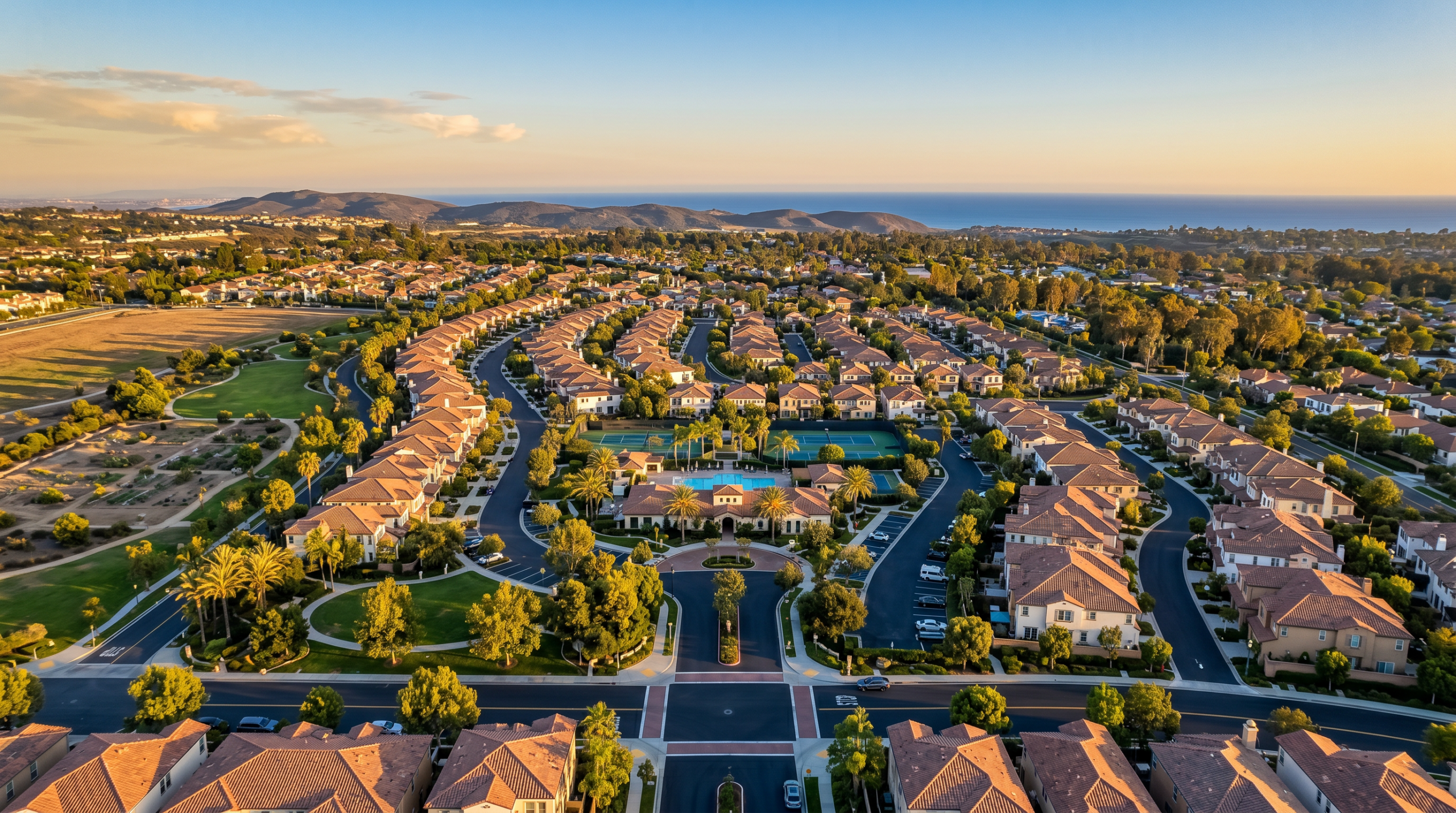
This article is part of an ongoing series on HOA electrical panel replacement and insurance compliance from Tradesman Electric, Orange County’s electrical panel replacement specialists. For background on insurance non-renewals, SB 382, firm selection, and engagement coordination, see our companion articles in this series. This HOA electrical upgrade funding guide focuses specifically on how California HOAs fund for association-wide electrical panel replacement work.
For most HOA HOAs approaching a panel replacement work, the funding question is the bottleneck. Boards know the work needs to happen. The electrical company is identified. The scope is defined. The schedule fits the carrier’s compliance window. And then the work stalls, sometimes for months, sometimes for years, because the board cannot agree on how to fund it.
The delay is rarely a board failure. It is a structural problem. California HOAs have a limited number of funding options for electrical panel replacement work, each with its own constraints, timelines, and political weight. Choosing among them requires the board to balance fiduciary duty, members’ tolerance for assessments, reserve study realities, and any insurance compliance deadline that is currently narrowing the available decision window.
This HOA electrical upgrade financing article walks through the four most common funding approaches for association-wide panel replacement work: special assessments, HOA loans, reserve fund draws, and phased approaches. We focus on what each approach requires in terms of execution, which timelines each fits, and the operational consequences boards should understand before committing. We also debunk several common claims floating around online about tax credits and energy efficient funding for HOA panel work, because the facts behind those claims have changed and boards relying on outdated information end up making poor fiscal decisions.
Important note: this article is not budgetary, legal, or reserve study advice. Every HOA’s circumstances are different, and funding decisions for HOA electrical replacement work should involve the board’s attorney, accountant, reserve study professional, and, where appropriate, insurance broker. We are sharing what we have observed across decades of association-wide projects in Orange County, not making recommendations for any specific HOA.
Why Funding strategy and Engagement Execution Cannot Be Separated
A common pattern: a board selects a electrical electrical company and signs a contract before the funding strategy is fully resolved. The thinking is reasonable. Get the work locked in, then sort out how to cover it.
In practice, this sequence creates problems. The funding model determines the work structure. An HOA paying through a special assessment that becomes available in 90 days needs a engagement that mobilizes in 90 days. An HOA paying through an HOA loan that closes in 30 days can mobilize quickly. An HOA planning a three-year phased approach needs a engagement broken into annual phases, with separate scope baselines for each. The electrical company cannot estimate, schedule, or procure materials accurately without knowing which of these scenarios is the actual plan.
Boards that prioritize funding strategy first and firm selection second tend to produce projects completed on time. Boards that reverse the order tend to produce projects that stall mid-mobilization while the funding question gets worked out, burning time the insurance compliance window may not have available. The cost of that delay shows up in every direction at once: rising materials cost, missed insurance compliance windows, and an HOA that cannot make informed decisions because the underlying numbers keep shifting.
The Four Most Common Funding approaches for HOA Electrical Panel Replacement work
Special Assessment
A special assessment is a one-time charge levied by the HOA on every member to fund a specific replacement work or expense. Under California’s Davis-Stirling Common Interest Development Act, special assessments are subject to specific procedural requirements (Civil Code Section 5605 and related sections). Assessments above 5% of the association’s annual budgeted gross expenses generally require membership approval. Smaller assessments and certain emergency assessments can be imposed by board action, subject to the statutory framework.
The mechanics matter for replacement work planning. A standard special assessment requires notice to membership, a comment period, often a special meeting, and in many cases a vote. From the board’s first decision to assessment approval, the timeline is typically 30 to 90 days. From approval to funds available is typically another 30 to 60 days, depending on the payment terms allowed to residents.
What this means for the work: a special assessment is workable when the insurance compliance window is six months or longer. It is increasingly difficult when the window is shorter. Boards facing a 90-day non-renewal deadline typically cannot complete a special assessment process and start the work before the deadline arrives.
The political weight of special assessments is also a real factor. Members who have not anticipated a significant one-time charge frequently push back, attend meetings, and in some cases organize against the board. Boards that have weathered contentious assessment votes know this; first-time boards often do not. The political risk is not a reason to avoid the assessment if it is the right answer for the association, but it is a reason to start the conversation early and document the rationale carefully.
HOA Loan
You have heard it said that HOA loans are often repaid through increased monthly assessments after replacement work completion, that lines of credit offer flexible access to funds for projects with uncertain final costs, and that term loans for HOAs provide a lump sum with a repayment schedule typically between 3 to 20 years. The reality is all three statements are essentially accurate. HOA loans are a well-developed category of association lending and remain the most flexible HOA-level funding strategy mechanism for time-sensitive work.
An HOA loan is a credit facility extended to the association, typically secured by the association’s right to levy assessments. Several California-based and national lenders specialize in HOA lending, and the underwriting process is well developed for this category of borrowers.
The mechanics differ significantly from a special assessment. Loan applications typically require board approval (and, in some HOAs, membership approval, depending on bylaws), budgetary documentation including current reserve studies, and the lender’s standard underwriting. From application to closing is typically 30 to 60 days. Once closed, funds are available immediately.
What this means for the work: an HOA loan is the funding mechanism with the shortest practical lead time for fully funded association-wide work. A board that closes a loan in 45 days can have the electrical company mobilizing soon after. For HOAs facing tight insurance compliance windows, this is often the only mechanism that fits.
The trade-off is the cost of capital. Interest accrues over the loan term, which is typically 5 to 15 years. Members effectively remit payment the work cost plus interest through monthly assessments rather than a single upfront charge. Some HOA lenders offer competitive borrowing rates, but borrowing rates vary based on the loan amount, term, and the association’s budgetary profile. Whether monthly amortization is preferable to a one-time assessment depends on the association’s budgetary position and member preferences. Some HOAs prefer the predictability of monthly assessments over the political difficulty of a one-time charge; others prefer to avoid debt entirely.
Lender selection matters. HOAs should work with lenders experienced in association lending, not general commercial banks unfamiliar with HOA structures. The board’s attorney and accountant should review loan terms before signing. Prepayment penalties, draw schedules, maximum loan amounts, and assessment-pledge structures vary significantly between lenders. Comparing lenders side by side helps the board establish the best fit and capture better borrowing terms where available.
Reserve Fund Draw
You have heard it said that HOAs typically maintain a reserve fund for major repairs and infrastructure replacements, and that reserve funds can avoid debt if the electrical upgrade was already planned and funded in the reserve study. The reality is both statements are true in principle. The catch most HOAs run into is that historical reserve studies rarely include individual unit electrical panel replacements. Reserves can still be used. The reserve study just needs to be updated before significant funds are drawn.
The reserve fund is the association’s accumulated savings for future capital needs. Reserves are funded through ongoing monthly assessments and are governed by reserve studies that replacement work future expenses across a multi-year horizon. Regular reserve studies help HOAs understand the remaining life of major systems and ensure proper funding for replacement work when they come due.
Using reserves to fund panel replacement is the cleanest funding mechanism. No special assessment, no loan, no member vote required if the work is appropriately reflected in the current reserve study. Funds are immediately available. The work can mobilize as quickly as the electrical company can prepare.
The structural problem is that most older HOA HOAs did not include panel replacement in historical reserve studies. Reserve studies typically project replacement of common-area systems (roofs, paving, exterior paint, pool equipment) but rarely individual unit electrical panels. Communities discovering panel replacement need today often discover that the reserve fund was never sized for it.
This does not mean reserves cannot be used. It means the reserve study should be updated before significant funds are drawn. A reserve study professional can model the impact of the draw on future reserve adequacy and recommend whether the draw should be partial (with the remainder funded another way) or whether a special assessment should replenish the reserves over time.
For boards with adequately funded reserves and a panel replacement need that fits within the reserve fund’s capacity, this is the smoothest funding model. For boards with under-funded reserves, attempting to use them for an association-wide project can leave the association exposed for the next major capital expense, which arrives whether reserves are ready or not.
Phased Approach
A phased approach spreads the work across multiple budget cycles, replacing a portion of the association’s electrical panels each year over two to five years. The funding for each phase comes from regular operating budget or modest annual special assessments rather than a single large funding event. You have heard it said that phased upgrades allow large projects to be broken into smaller, more manageable stages. That is accurate as a general principle. The complication is what phasing costs the association in efficiency, materials cost, and insurance exposure.
Phasing has a clear appeal: it sidesteps the political and budgetary difficulty of a large one-time funding decision. It also fits communities whose reserves are not currently adequate for association-wide replacement but can be built up over time.
The operational reality is more complicated. Phased projects produce different per-unit pricing than single-mobilization projects, because the electrical company is mobilizing repeatedly, procuring materials in smaller batches, and is unable to capture the volume efficiencies of a single large project. Materials cost may also rise between phases. The total project cost over a three to five year phased schedule is typically meaningfully higher than the same scope completed in a single six-month project. Phasing can also increase costs by exposing later phases to inflation in labor and materials, and by requiring repeated permitting and inspection cycles.
The bigger problem is insurance. Carriers issuing non-renewal warnings on association-wide panel concerns rarely accept multi-year phasing as compliance. The carrier wants the entire HOA brought to a consistent baseline within a defined window, typically 12 months or less. A three-year phased plan may satisfy the board’s funding constraints but leaves the association exposed to non-renewal in years one and two, when most of the electrical panels are still original.
Phasing works best in communities where insurance pressure is not yet acute and where the board has time to address higher-risk panels (Federal Pacific Electric, Zinsco) immediately while spreading lower-risk replacements across years two and three. It does not work as a strategy for communities already on a non-renewal clock.
Hybrid Approaches
In practice, most communities end up with hybrid funding for HOA electrical panel upgrades. A common combination: an HOA loan for the majority of the work cost, a modest special assessment to reduce the loan amount, and a reserve fund draw for the remainder. Another: a phased approach for the lower-risk portion of the association, combined with an immediate special assessment or loan for the high-risk units.
Hybrid funding lets boards balance the strengths and weaknesses of each individual approach. The political difficulty of a single large special assessment is reduced when combined with loan funding. The interest cost of a loan-only approach is reduced by deploying available reserves. The phasing risk is mitigated by allocating concentrated funding to the highest-risk units first.
These structures are common enough that experienced HOA attorneys, accountants, and reserve study professionals routinely help boards model them. The cost of professional input on a hybrid funding strategy is small relative to the work itself and almost always worth it.
What About Tax Credits, PACE, and Energy-Efficient Residential improvement Programs?
This is the section where the most outdated and misleading information shows up in online HOA funding guides. Boards reviewing advice from sources written before 2026 are routinely told they can rely on federal tax credits, energy-efficient mortgage programs, or PACE funding to offset the cost of HOA electrical upgrades. The facts behind several of those claims have changed, and the rest rarely apply to HOA-funded HOA work in the first place. We debunk them one by one below so boards can make informed decisions rather than chase incentive payments that no longer exist or were never available for this category of work.
The 25C Federal Tax Credit Claim
You have heard it said that the 25C Heat Pump tax credit, also referred to as the Energy Efficient Residential improvement Credit, may cover up to 30% of your electrical panel project costs, capped at $600, and is applicable for energy-efficient home improvements made before December 31, 2025. You may have seen broader claims that federal tax credits under specific programs provide benefits for individual owners for HOA-mandated upgrades, or that remaining tax credits can be passed through to individual owners for claims on their tax returns. The reality is the 25C Energy Efficient Home Improvement Credit, which included the up-to-$600 credit for qualifying electrical panel upgrades, expired on December 31, 2025. For electrical panel work placed in service in 2026 or later, this federal tax credit is no longer available, period. If your HOA completed work in 2025, individual qualifying owners may still be able to claim the credit on their 2025 federal return using IRS Form 5695. For 2026 work and later, that door is closed.
Two additional points boards routinely miss on this credit, even when it was active. First, the credit was always claimed by individual unit owners on their primary or secondary residence, not by the HOA itself. Pass-through claims for HOA-mandated upgrades were always narrow and required careful documentation that the homeowner, not the association, paid for the qualifying expense. Second, the panel had to meet specific requirements (typically a load capacity of 200 amps or more aligned with the National Electrical Code) to qualify in the first place. Many older HOA service drops are smaller than 200 amps, and a like-for-like replacement at the original amperage would not have qualified even when the credit existed.
Bottom line: do not plan your HOA-level funding strategy around the 25C credit. It expired. Talk to your tax advisor about any 2025 work, and assume zero federal credit support for 2026 work and later.
PACE Funding for HOA Electrical Panel Work
You have heard it said that government programs such as Parcel Assessed Clean Energy (PACE) allow repayment of energy efficiency upgrades through parcel tax bills, and that PACE can be used to finance energy efficient home upgrades. The reality is PACE is a real program in California, but it is structured around individual residential property owners, not HOAs, and it is restricted to energy or water efficiency improvements, electric vehicle charging infrastructure, or clean energy improvements. Emergency panel replacement driven by insurance compliance or electrical safety risks does not typically qualify on its own. Panel work that is part of a documented energy efficiency upgrade (for example, a panel upgrade to support a heat pump or EV charger installation) may qualify, but that is a different conversation than association-wide HOA panel replacement.
PACE funding carries other complications boards should understand before considering it. PACE assessments become a lien on the individual homeowner’s property and are repaid through the residence tax bill. Fannie Mae and Freddie Mac decline to purchase mortgages on properties with PACE assessments, which can complicate resale. The California Consumer Budgetary Protection Bureau and state legislature have tightened residential PACE underwriting rules over the past several years specifically because of consumer protection concerns. PACE is rarely the right answer for an HOA-funded association-wide project, and any board considering it should consult with their attorney and the residents who would actually carry the PACE assessment on their individual tax bills.
Energy-Efficient Mortgages and HERS Ratings
You have heard it said that energy-efficient mortgages (EEM) allow borrowers to qualify for larger mortgage amounts by considering lower energy costs, making them a viable option for funding energy-efficient home upgrades, and that home energy ratings such as HERS or the DOE Home Energy Score are often required to qualify. The reality is both are accurate statements about residential mortgage funding for individual unit owners, not funding mechanisms available to HOAs. Energy efficient retrofits that an individual homeowner finances through an EEM at the point of home purchase or refinance are a personal funding decision. They are not an HOA electrical upgrade funding mechanism and should not appear in board planning for association-wide projects.
FHA Loans, Electrical electrical company Funding, and Home Equity Loans
You have heard it said that owners can explore various financing options for electrical upgrades, including traditional loans, home equity lines of credit (HELOC), home-equity line of credit products, electrical electrical company financing programs, and FHA loans available for energy upgrades and renewable energy retrofits in every state. The reality is each of these is available to individual unit owners who want to upgrade their own electrical system, not to the HOA as an entity. A home equity loan, HELOC, or FHA energy upgrade loan finances work on the individual unit, paid by the individual homeowner. None of these mechanisms fund an HOA-wide HOA panel replacement work. Boards confused on this point sometimes try to push individual unit owners to finance their own panel replacement through HELOCs or electrical electrical company financing. This rarely produces a consistent outcome across 100 units and routinely produces the kind of fragmented, undocumented project that satisfies neither carriers nor future buyers.
Utility incentive payments, Grants, and Other Resources
You have heard it said that utility incentive payments can incentivize energy-saving upgrades in common areas such as LED lighting, that federal, state, and local governments often offer grants, rebate programs, and incentives for energy-efficient upgrades, and that the Database of State Incentives for Renewables & Efficiency (DSIRE) lists available programs by location. The reality is these statements are accurate for energy efficiency upgrades like LED retrofits, HVAC efficiency improvements, and renewable energy installations, where utility incentive payments and grants can genuinely offset cost. They do not generally apply to safety-driven HOA electrical panel replacement work. A panel replacement performed because Federal Pacific Electric or Zinsco panels are creating fire hazards and insurance compliance problems is not, in itself, an energy-efficient improvement. It is a safety upgrade and an insurance compliance upgrade. Boards should not plan electrical panel financing around utility rebates that do not exist for this scope of work, though they should ask their utility provider directly whether any current programs apply to their specific HOA.
There is also a separate category sometimes raised in HOA funding conversations: home repair programs and assistance programs that offer monetary aid to low-income owners for essential home repairs, including electrical work. These programs exist at the federal Department of Housing and HOA development (HUD) level, at the state Department of HOA Services and Development level, and at the county Department of Public Social Services level. They are structured around individual low-income owners who meet income-based eligibility (typically tied to area median income), not around HOAs. They are an important resource for individual unit owners who genuinely cannot afford their share of an assessment, but they are not a funding mechanism the HOA itself uses.
Resource Guide: Programs Individual unit owners Should Know About
This guide is for individual owners in your HOA who may be looking for outside financial assistance with their share of an assessment, especially in older homes or in cases of demonstrable hardship. None of these are HOA-level financing options. They are resources owners seeking assistance can investigate independently.
Federal Department of Housing and Urban Development (HUD) Programs
The federal Department of Housing and Urban Development offers home repair programs through several channels, primarily targeted at very low income owners. The Section 504 Home Repair program offers home repairs assistance through USDA Rural Development, though most Orange County urban housing is not eligible. The HUD Title I Property Improvement Loan program allows homeowners to finance home improvement work, including electrical work, through approved lenders. These programs have specific income-based eligibility based on income, property type, and the nature of the work. Homeowners should contact their local HUD office or the California Department of Housing and HOA Development for current details on which programs apply to their situation.
Utility Provider Programs and Utility Bills Impact
Southern California Edison and SoCalGas offer various energy efficiency programs that can help homeowners save money on utility bills through home energy upgrades. These programs typically target energy-efficient home performance improvements like insulation, weatherization, air sealing, HVAC heating and cooling efficiency, and home energy audits. They do not generally cover panel replacement on its own. They may apply if the panel upgrade is part of a documented home energy efficiency project. Owners who want to determine whether their planned electrical work qualifies should contact their utility provider directly. Lower monthly bills from related home energy efficiency improvements can partially offset the long-term financial impact of a panel upgrade, though the savings are modest relative to the panel project’s cost.
State and Local Programs
California state programs and county-level programs occasionally offer financial assistance for older homes needing essential electrical work to remove health and safety hazards. The state Department of HOA Services and Development administers the Low Income Home Energy Assistance Program, which primarily helps with energy bills and weatherization but may include limited electrical safety work in some cases. County housing departments occasionally have home repair programs for very low income homeowners. Orange County’s Office on Aging maintains a list of senior home repair resources. Homeowners can contact 211 Orange County to be connected to current programs.
Available Tax Credits and Incentives Going Forward
As covered above, the federal 25C credit has expired. The remaining available tax credits at the federal level are narrow and apply mainly to geothermal heat pumps, solar installations placed in service before deadlines that have already passed, and certain commercial energy improvements. State incentives and rebates vary, and the DSIRE database remains the cleanest resource for current programs by location. The California Energy Commission publishes a separate list of incentives for energy efficient retrofits that may benefit individual homeowners pursuing related work alongside their panel upgrade. Homeowners considering whether to combine a panel upgrade with energy efficient home improvements (heat pump, EV charger, solar) should run those numbers carefully with their tax advisor before committing, because the combined approach may unlock incentives that the panel work alone would not.
Home Equity Products and Home Mortgage Refinance
For homeowners with sufficient equity, a home equity loan, HELOC, or cash-out refinance of an existing home mortgage can fund their share of an assessment. Borrowing rates vary by lender and by the homeowner’s credit profile. Homeowners should compare lenders, look for lower borrowing rates, and review terms carefully before drawing against home equity. Lower borrowing rates on a home equity loan are not the same as lower overall cost if the term is significantly longer. A 15-year home equity loan at favorable borrowing rates may still produce a higher total cost than a 5-year HOA-level financing arrangement at slightly higher borrowing rates. Compare lifetime cost, not just monthly payment.
Electrical company Financing Programs
Some electrical contractors offer contractor financing programs through third-party lenders to help homeowners pay for individual home improvement work. These programs are designed for individual residential work, not multi-unit HOA projects. Tradesman Electric does not offer contractor financing for HOA-funded HOA work because the HOA itself is the customer, and the HOA’s own financing structure is the right place for that conversation. For individual residential customers outside an HOA project, contractor financing options may be available; ask during the proposal phase.
How the Insurance Timeline Constrains Financing Choices
For boards working under an active non-renewal warning, the funding question is bounded by the carrier’s compliance window. If the carrier has given the association 12 months to bring electrical panels into compliance, every financing option must fit within that window.
Inside a 12-month window:
• A special assessment is workable if started immediately.
• An HOA loan is comfortably workable.
• A reserve fund draw is workable if reserves are available.
• A phased approach across multiple years is not workable.
Inside a 6-month window:
• A special assessment is difficult. The procedural timeline alone consumes much of the window.
• An HOA loan is workable.
• A reserve fund draw is workable.
• A phased approach is not workable.
Inside a 3-month window:
• A special assessment is essentially not workable.
• An HOA loan may be workable depending on lender responsiveness.
• A reserve fund draw is the most reliable mechanism.
• Boards in this window should already be in active conversation with their broker about extension, alternative carrier markets, or both.
Boards should determine where they are on the insurance clock before settling on a funding approach. The mechanism that fits a 12-month window is often not the same one that fits a 3-month window, and reading the wrong window leads to commitments the work cannot meet.
How the Funding model Shapes the Panel replacement work
Beyond timing, the funding model affects how the work is structured operationally.
A fully funded project (special assessment received, loan closed, or reserves drawn) allows the electrical company to pre-procure materials for the entire community at contract signing. Materials are delivered to the electrical company’s warehouse, supply chain risk is eliminated, and the crew can move through the association on the most efficient sequence. Documentation is produced as a single coordinated package at completion.
A partially funded project, for example a phased approach where each phase is funded annually, requires the electrical company to procure materials for each phase separately. Materials cost may rise between phases. The crew’s mobilization is repeated for each phase, which adds setup time and reduces overall efficiency. Documentation has to be produced separately for each phase rather than as a single coordinated package.
The electrical company needs to know the funding model up front because it affects the bid itself. A contractor bidding a single-mobilization project can offer different pricing and timing than a contractor bidding a three-year phased project. Boards that change the financing model after contract signing should expect change orders and timeline adjustments. The overall value to the association is highest when the funding strategy, the electrical company selection, and the work scope are aligned from the start.
Reserve Study Planning Going Forward
Communities that have not included panel replacement in their reserve studies should consider doing so going forward. Even communities that fund their current panel project through other mechanisms (assessment, loan, or one-time reserve draw) will face future replacement cycles for the new electrical panels installed today. Modern panels under normal conditions typically have a service life of several decades, but they will eventually need replacement, and the next generation of boards will face the same funding question this generation is facing.
Building this future expense into the reserve study now allows monthly assessments to fund it gradually, avoiding the financing scramble the current generation of boards is experiencing. A reserve study professional can model what monthly contribution is required to fund the next replacement cycle on a smooth basis. This is the conversation that should happen at the close of any current panel replacement work, not deferred until the next cycle is imminent.
Frequently Asked Questions About HOA Electrical Panel Financing
Can homeowners qualify for individual tax credits or financial assistance on HOA-mandated electrical panel upgrades?
For 2026 and later, no federal tax credits remain in effect for residential electrical panel upgrades. The 25C Energy Efficient Home Improvement Credit, which previously allowed individual homeowners to qualify for up to $600 against their tax bill for a qualifying panel upgrade, expired December 31, 2025. State-level rebates and utility incentive programs vary by location and by scope. Very low income homeowners may qualify for home repair programs or financial assistance programs that offer financial assistance for essential electrical work, but those programs are independent of any HOA pass-through and have their own eligibility requirements. Homeowners seeking individual financial assistance should consult their tax advisor and check current state and local resources, since the program landscape continues to shift.
Are there any 2026 federal programs that still apply to electrical panel work?
As of 2026, the federal energy efficient home improvement credit landscape has narrowed significantly. Boards should not plan financing around federal tax credits that no longer apply. The Database of State Incentives for Renewables & Efficiency (DSIRE) remains a useful resource for current state and utility programs, but very few of those programs apply to safety-driven HOA electrical panel replacement. Most utility programs that remain are oriented toward energy efficient upgrades like HVAC efficiency, insulation, air sealing, weatherization, and electric vehicle charging infrastructure, not panel replacement on its own. If your project includes related energy efficient improvements (such as a panel upgrade specifically to enable EV charging or a heat pump installation), some of those adjacent improvements may still qualify for utility rebates, but the panel itself usually does not.
What if some homeowners cannot pay a special assessment?
Boards should plan for this in advance. The Davis-Stirling Act provides specific rules for collection of unpaid assessments, including liens and, in extreme cases, foreclosure. Most boards prefer to avoid these remedies and instead offer payment plans, hardship deferrals, or referrals to home repair programs and assistance programs available through county and state agencies. Some communities also explore HELOC or home equity loan options for the individual homeowner, though this is the homeowner’s personal decision and the HOA should not be promoting any specific lender. The cleanest approach is to combine a financing structure (typically an HOA loan or a combination of loan and reserve draw) that does not require every homeowner to pay a large amount at the same time.
How does funding strategy affect the project schedule?
Significantly. As an example, a community using an HOA loan can mobilize within 30 to 60 days of board approval. A community using a special assessment is typically 60 to 150 days from board decision to project mobilization. A community using reserves and an updated reserve study is typically 30 to 90 days. A community planning a multi-year phased approach is mobilizing in phases over two to five years. The financing decision is the schedule decision. Boards should determine which financing path they are on before committing to a specific contractor mobilization date.
Should we use the lowest interest rates we can find or work with an HOA-specialist lender?
Lower interest rates matter, but lender experience matters more. HOA loans are structured differently from commercial loans. The collateral is the association’s right to levy assessments, the underwriting reviews reserve studies and historical assessment collection, and the documentation references Davis-Stirling and the association’s governing documents. A commercial bank unfamiliar with this structure may offer competitive interest rates on paper but produce a slower closing, more friction, and loan terms that do not fit how an HOA actually operates. A specialist HOA lender at a slightly higher interest rate often produces a better outcome. Boards should compare both options side by side and review with the board’s attorney and accountant before committing.
Are there grants available for HOA electrical panel replacement?
Grants specifically funding HOA electrical panel replacement projects are rare. Most grant programs that fund residential electrical work are structured around individual very low income homeowners, are administered by state agencies or HUD-affiliated programs, and have eligibility requirements tied to area median income. They are an important resource for individuals, not a funding mechanism for multi-unit HOA work. Some county and city programs occasionally offer grants for emergency electrical safety work that addresses identified safety hazards, but these are not consistent across jurisdictions and should not be planned around. The realistic financing menu for multi-unit HOA electrical panel upgrades remains the four approaches above: assessment, loan, reserve fund, or phased approach, in some combination.
Where Tradesman Electric Fits in the Financing Picture
We are not financial advisors, attorneys, or reserve study professionals. We do not recommend financing mechanisms or model the financial impact of different approaches. Boards should rely on their own professionals for those questions.
What we can do is provide the project-side inputs those professionals need. A free multi-unit assessment produces the scope baseline (every panel identified by brand and condition) that any financing decision needs to be built against. Without that baseline, financial advisors are estimating against a moving target. With it, the board’s attorney, accountant, and reserve study professional can model financing scenarios against a defined number and help the board make informed decisions about which combination of approaches will deliver the best value for the association.
We can also structure panel replacement projects to fit the financing model the board selects. Single-mobilization projects fit fully funded approaches. Phased projects fit multi-year financing strategies. Modular project structures with high-risk units sequenced first fit hybrid strategies. The right structure depends on the financing strategy, and we work backwards from the strategy to design the project.
For boards considering whether to engage an HOA loan provider, reserve study professional, or HOA attorney, we can share contacts we have worked with across decades of HOA projects. Selection of those professionals is the board’s decision, but introductions can help. Our team has worked with HOA communities across Orange County since 1991, and we know which professionals understand multi-unit electrical panel replacement and which ones are still climbing the learning curve.
Since 1991, under C-10 License #1049948, we have built our operation specifically around multi-unit HOA panel replacement. Our 12-person dedicated crew completes more than 400 panel replacements every year. Our 3,000 square foot warehouse in Laguna Hills allows us to pre-procure materials for entire HOA projects, eliminating supply chain delays as a project variable.
Planning Ahead: What Boards Should Know About Future Replacement Cycles
Once the current panel replacement work is complete, the board should think about how to maintain the new panels and budget for the next replacement cycle. Modern panels properly installed in good conditions can deliver decades of reliable service, but they will not last forever. Boards that plan ahead avoid the funding scramble the current generation is going through.
Several adjacent topics often come up at this stage. Home repairs in older units may need attention alongside the panel work, particularly any related electrical home repairs that have been deferred. Remodeling and home repairs that touch the electrical system, including kitchen remodeling, bath remodeling, or larger home repairs that add new circuits, should be evaluated against the new panel capacity. Some HOAs prepare a written report at the close of the panel project that documents which units may need future home repairs and which units have headroom for future load increases. That report is also useful for resale disclosures and for the board to maintain a clear record of the multi-unit electrical baseline.
For unit owners considering related work after the panel replacement, the benefit of upgrading HVAC heating equipment, water heater work, or HVAC to more efficient models can deliver real long-term savings on energy bills. Heating efficiency programs and utility incentive programs may offer small savings, though as noted above, the relevant federal credit program for heating equipment and other energy work expired at the end of 2025. A water heater work program upgrade, a heat pump program installation, or weatherization through a state efficiency program can each contribute to a more energy efficient home and lower monthly utility bills. None of this reduces the project’s cost on the panel work itself, but the long-term savings can partially offset the household budget impact for individual residents over time. Money saved on energy bills will not pay for the panel replacement, but it can make the overall budget easier to absorb. The benefit is real even if modest.
Boards should also be aware of state and federal program activity that changes year to year. Each program has its own application window, its own eligibility rules, and its own report-back requirements once funds are disbursed. A state weatherization assistance program, a utility-administered efficiency program, and a county home repairs program may all run in parallel and may all benefit individual unit residents pursuing related work. Tracking which program is active helps the board point residents to the right resource, even though the HOA itself is not the program applicant. For boards thinking about financing energy improvements at the common-area level (lighting, HVAC, irrigation pumps), the program landscape is somewhat better than for individual panel replacement; common-area efficiency upgrades remain a category where utility programs and limited federal program incentives still apply. A more energy efficient home for the residents and a more efficient common-area baseline for the HOA can both be part of the longer-term plan.
Schedule a Free Multi-unit Assessment
Before any financing decision can be finalized, the board needs a defined scope baseline: a complete identification of which electrical panels need replacement, what condition they are in, and what the project would actually require to complete. We provide that assessment at no cost and no obligation, with a written report delivered within 48 to 72 hours of the walk-through.
The assessment is the foundation that funding decisions are built on. Without it, financing conversations are speculative. With it, the board’s attorney, accountant, and reserve study professional have the inputs they need to model real options.
To schedule your free multi-unit assessment, call Tradesman Electric at (949) 978-0535 or visit www.thetradesmanelectric.com. For more guides on HOA electrical safety, firm selection, project coordination, and panel replacement planning, visit our blog.
Tradesman Electric, Orange County’s Breaker Panel Replacement Specialists
(949) 978-0535