
This article has been independently fact-checked against primary sources, including the Davis-Stirling Common Interest Development Act, California Civil Code, and California insurance market data. All claims are sourced and verified as of February 2026.
No HOA board looks forward to presenting a special assessment. A project of this scale — community-wide electrical panel replacement across dozens or hundreds of units — represents one of the largest expenditures most associations will ever authorize. Homeowners will have questions, objections, and concerns. Some will be vocal. A few will be hostile.
The boards that navigate this successfully are not the ones with the smoothest presenters or the most polished slides. They are the ones who walk into the room with something more valuable: a clear, honest case built on facts that homeowners can verify, delivered through a communication process that respects residents as intelligent adults rather than obstacles to manage.
This article gives you that case and that process. It covers the psychology of homeowner resistance, the specific objections you will face and how to address them honestly, and a complete communication framework — from the first board meeting to the final town hall — with sample language you can adapt directly.
The goal is not to sell homeowners on the assessment. It is to give them the information they need to understand why it is necessary. When the facts are presented clearly and completely, most reasonable homeowners reach the right conclusion on their own.
Why Homeowner Resistance Happens — And Why It Is Predictable
Understanding resistance begins with understanding the homeowner’s position. When a board announces a significant special assessment, most homeowners are processing several things simultaneously.
They are surprised. Most homeowners have no idea their electrical panels present any concern. The panels have worked for decades. No one has mentioned this before. The announcement feels sudden even when the board has been aware of the issue for months.
They are skeptical. The announcement is coming from the same board that approved the landscaping contract and raised dues last year. Some homeowners are predisposed to question board decisions regardless of merit. A project of this scale triggers that skepticism immediately.
They are calculating. They are doing rough math on what this means for their personal finances — the assessment amount, the payment timeline, how this interacts with their mortgage, what happens if they cannot pay.
They are looking for an exit. Is there a cheaper option? Can we do fewer units? Can we delay this? Is this really required?
None of this is unreasonable. It is exactly what most people would feel receiving unexpected news about a significant financial obligation. The board’s job is not to overcome these reactions — it is to address them directly, honestly, and with enough supporting information that homeowners can evaluate the situation themselves.
The boards that generate the most resistance are those that lead with the assessment amount. The boards that generate the least resistance are those that build the case first, so that by the time the number is revealed, most homeowners already understand why it is necessary.
The Communication Sequence That Works
Effective special assessment communication is not a single meeting. It is a structured sequence of touchpoints that moves homeowners from surprise to understanding before they are ever asked to vote or pay.
Communication One: The Issue Notification
Before any mention of a special assessment, homeowners need to understand that there is a problem. The first communication focuses entirely on the issue — not the solution, not the cost.
This communication goes out immediately after the board has received the professional inspection report and confirmed the scope of the problem with the insurance carrier. It does not speculate. It reports facts.
Sample language:
Dear Lakeglen Homeowners,
The board has completed a professional electrical inspection of our community. The inspection identified Federal Pacific Electric and Zinsco electrical panels throughout the property — panel brands with documented safety concerns that are currently causing our insurance carrier to flag our community for potential non-renewal.
We want to share this information with you directly and promptly. In the coming weeks, the board will be reviewing options, consulting with our insurance broker and legal counsel, and evaluating contractor proposals. We will hold a community meeting to present our findings and answer your questions before any decisions are finalized.
What this means right now: nothing changes immediately. Your homes are not in imminent danger, and your insurance has not been canceled. But this is a serious issue that requires the board’s attention, and we are committed to keeping you informed throughout the process.
If you have questions in the meantime, please contact [property manager contact]. More information will follow within [timeframe].
Notice what this communication does not do. It does not mention cost. It does not propose solutions. It does not ask for anything. It simply informs homeowners that the board is aware of an issue and is addressing it responsibly. This positions the board as proactive and transparent — the exact impression that makes subsequent communications land better.
Communication Two: The Board Decision Notice
After the board has evaluated contractor proposals and voted to proceed with the project, homeowners receive a second communication explaining what the board has decided and why.
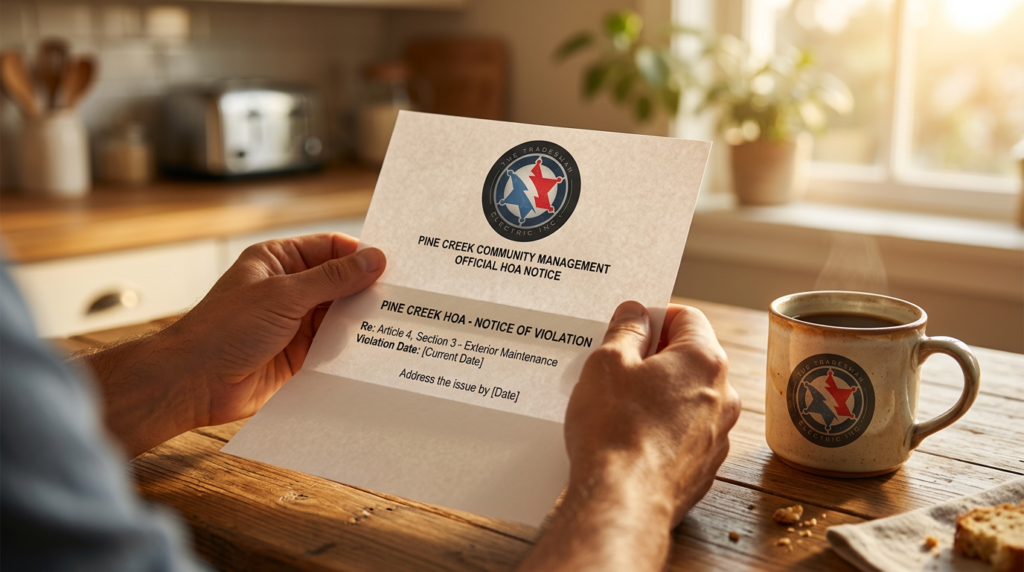
Sample language:
Dear Lakeglen Homeowners,
Following our professional inspection, insurance carrier consultation, and review of contractor proposals, the board has voted to proceed with community-wide electrical panel replacement. Here is what the board considered in making this decision.
Our insurance situation: Our carrier has confirmed that the Federal Pacific Electric and Zinsco panels identified in the inspection represent a coverage concern. Without replacement, we face a significant risk of non-renewal at our next renewal date. A lapse in coverage would affect every homeowner’s mortgage and individual unit insurance.
The safety record: Federal Pacific panels have documented breaker failure rates of 60 to 70 percent during overcurrent conditions, based on independent testing by electrical engineer Dr. Jesse Aronstein. Zinsco panels have documented patterns of aluminum bus bar corrosion that can cause invisible arcing — fire hazards that develop behind the panel face and are undetectable without professional inspection.
Our contractor: After reviewing proposals from multiple qualified contractors, the board selected Tradesman Electric, which has completed more than 400 HOA panel replacements annually with a dedicated 12-person crew, a full-time project coordinator, and a 20-year written workmanship warranty.
Funding: The board is currently finalizing the funding structure for this project. A detailed breakdown of the assessment and payment options will be presented at the community town hall scheduled for [date]. All homeowners are encouraged to attend.
This communication gives homeowners time to process the board’s decision before the town hall. It also establishes the factual foundation — safety data, insurance stakes, contractor qualifications — before the assessment amount is ever introduced.
Communication Three: The Town Hall Invitation
A formal invitation to the town hall goes out at least two weeks before the meeting. It confirms the date, time, and location; outlines the agenda; and explicitly invites questions.
Sample language:
The board invites all homeowners to attend a community town hall to discuss the electrical panel replacement project and the proposed special assessment.
Date: [Date] Time: [Time] Location: [Location]
Agenda: — Why this project is necessary: safety and insurance facts — What the replacement process looks like for your unit — The proposed assessment: amount, structure, and payment options — Timeline and what to expect — Q&A
This meeting is your opportunity to ask questions and hear directly from the board and our contractor. We want every homeowner to have the information needed to understand this project fully. Please plan to attend.
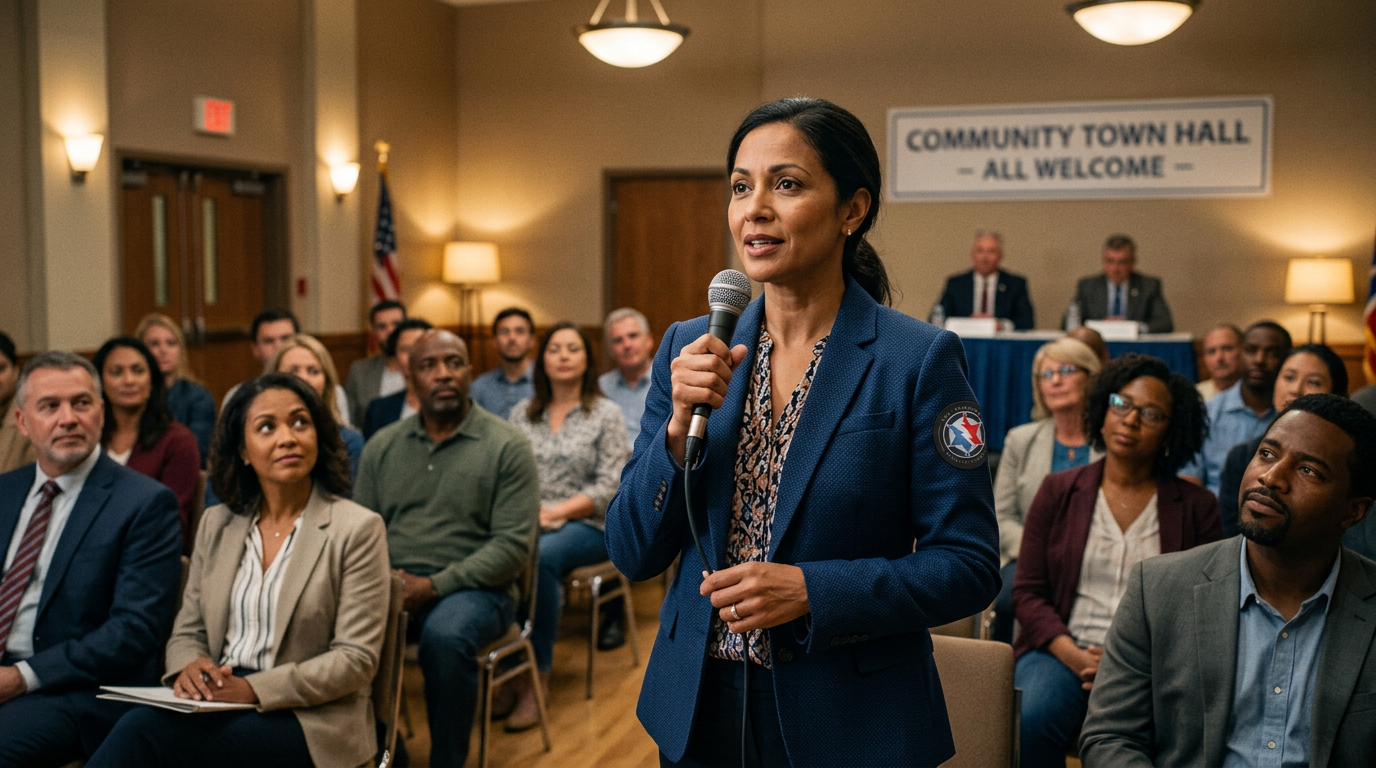
The Town Hall: Structure and Talking Points
The town hall is where the assessment is formally presented. The structure matters as much as the content — because the sequence in which information is delivered determines how it is received.
Open With Safety, Not Cost
The first section of the town hall is entirely about the problem. Not the solution. Not the cost. The problem.
Talking points:
“Tonight we want to walk through exactly what we found, what it means for our community, and what the board has decided to do about it. Before we talk about the project or the assessment, we want to make sure everyone understands what we are actually dealing with.”
“Our professional inspection identified [X] Federal Pacific Electric panels and [X] Zinsco panels across the community. These are specific panel brands with documented safety concerns — not because they are old in general, but because of specific failure modes that have been identified through independent testing and fire investigations.”
“Federal Pacific panels — the Stab-Lok breaker panels in [X] of our units — have been independently tested and found to fail to trip during electrical faults approximately 60 to 70 percent of the time. The breaker’s job is to cut power when something goes wrong. These breakers do not do that job reliably. A panel can appear completely normal for decades and fail the one time it matters.”
“Zinsco panels have a different failure mode. The aluminum bus bars inside these panels corrode over time, causing arcing that happens behind the panel face — invisible during any visual inspection. The panel looks fine. The hazard is not visible until it becomes a fire.”
“We are not telling you this to alarm you. We are telling you because this is the information the board used to make its decision, and you deserve to have the same information.”
Present the Insurance Stakes Second
After the safety case is established, shift to the insurance implications.
Talking points:
“Our insurance carrier has reviewed our inspection report and confirmed that the presence of these panels puts our master policy at risk. Without replacement, we are facing potential non-renewal.”
“A lapse in our master policy affects every homeowner. If you have a mortgage, your lender requires the HOA to carry a master policy. Without it, your lender has the right to arrange force-placed insurance — coverage they select, at rates that can run 300 to 500 percent above standard premiums — and bill it to you.”
“Property sales become significantly more difficult when buyers cannot obtain coverage for a community with known panel hazards. Under California Senate Bill 382, effective January 1, 2026, sellers are required to disclose electrical panel concerns to buyers. Every transaction in our community will reflect this issue until it is resolved.”
“The board’s obligation under the Davis-Stirling Act is to maintain the community and maintain adequate insurance coverage. This project addresses both obligations simultaneously.”
Present the Project Third
Now that the why is established, explain the what.
Talking points:
“Here is what the replacement project looks like for your unit. On your scheduled installation day, a licensed electrician arrives in the morning. Power is off by 8 AM. The old panel is removed and the new one is installed in the same location. Every circuit is connected, traced, and labeled. Modern safety devices are installed where code requires. A city inspector signs off on the work. Power is restored by 5 PM the same day. No overnight outage. No need to vacate your home.”
“The project is managed by a dedicated project coordinator who handles scheduling, permits, utility coordination, and communication throughout. Every unit gets advance notice of its installation date. The board receives weekly progress reports. The entire project is tracked in real time.”
“When the project is complete, your community will have code-compliant 200-amp panels from modern manufacturers, a complete documentation package for our insurance carrier, and permits on file for every address.”
Present the Assessment Last
Only after the safety case, the insurance stakes, and the project scope are fully established should the assessment amount be presented.
Talking points:
“The board has evaluated the funding options available to us. [Describe the chosen funding structure — reserve funds, special assessment, HOA loan, phased approach, or combination.]”
“The proposed special assessment is [amount] per unit, payable [payment structure]. [If an HOA loan is involved: The association has secured financing that allows this to be paid over [term] rather than as a lump sum.] The board will [describe approval process per CC&Rs].”
“We recognize this is a significant financial obligation for many homeowners. The board did not arrive at this decision lightly. What we can tell you is that the cost of this assessment is substantially less than the cost of what happens if we do not act — higher insurance premiums, potential force-placed coverage, property values affected by known unresolved hazards, and the ongoing liability exposure the board faces from a documented safety concern that has gone unaddressed.”
“If you have financial hardship concerns, please speak with [contact] after the meeting. [Include any hardship provisions the board has established.]”
The Objections You Will Face — And How to Address Them Honestly
No matter how well the town hall is structured, certain objections will come up. Here is how to address the most common ones with facts rather than deflection.
“These panels have worked fine for 40 years. Why is this suddenly a problem?”
“That is exactly the right question, and we want to answer it directly. The failure mode that makes these panels dangerous is not something that develops gradually — it is a failure that happens during a fault condition, the one moment when the breaker needs to cut power. A panel can appear completely normal and still fail that test. Forty years of normal operation means the panel has never been seriously tested. Independent testing found that Federal Pacific breakers fail to respond during electrical faults approximately 60 to 70 percent of the time. We do not know which of our panels would fail. We do know the risk is real and documented.”
“Can’t we just switch insurance companies instead of doing this?”
“The board looked into this. What we found is that this is not an individual carrier’s policy — it is an industry-wide position based on the same actuarial data. Every major carrier has the same underwriting standards for these panel types. A new carrier will inspect and find the same panels. In fact, new policy applications face stricter scrutiny than renewals. There is no carrier that will write standard coverage for a community with these panels in place. The only path to standard market insurance is replacement.”
“Why can’t homeowners handle their own units instead of a community-wide assessment?”
“The board evaluated this option. The problem is consistency and documentation. If each homeowner manages their own replacement, we end up with units completed at different standards, by different contractors, with different permit outcomes. Insurance carriers require community-wide compliance with uniform documentation — not a patchwork of individual projects. Centralized management also gives every homeowner the benefit of volume pricing that individual replacements cannot achieve. And it ensures that no units fall through the cracks, which would leave the community’s insurance compliance incomplete.”
“I can’t afford this right now.”
“The board hears this concern and takes it seriously. [Describe any hardship provisions, payment plan options, or financing structures the board has established.] If you are facing genuine financial hardship, please speak with [contact] privately after this meeting so we can discuss your specific situation.”
“The board should have caught this sooner.”
“You are right that this issue has existed for some time. The board acted as soon as we had professional confirmation of the scope and the insurance implications. Going forward, the board is committed to the kind of proactive infrastructure assessment that ensures issues like this are identified and addressed on the board’s timeline rather than an insurance carrier’s deadline. That is exactly what we are doing now.”
After the Town Hall: Keeping Momentum
The town hall is not the end of the communication process — it is the midpoint. What happens after the meeting determines whether momentum builds or stalls.
Send a written summary of the town hall within one week. Include the key facts presented, the Q&A summary, the assessment details, and the timeline. This gives homeowners who attended a reference document and ensures homeowners who could not attend are not left behind.
Establish a clear channel for follow-up questions. A dedicated email address or property manager contact ensures questions get answers without board members being approached individually in the parking lot.
Communicate progress during the project. Short monthly updates — units completed, timeline status, any changes — keep the community engaged and reinforce that the project is being managed professionally. The homeowners who were most skeptical at the town hall often become the most reassured by consistent, factual progress updates.
What Successful Communication Actually Accomplishes
The goal of this entire communication process is not to eliminate all opposition. Some homeowners will object to any special assessment regardless of the circumstances. The goal is to ensure that every homeowner who is reachable with facts has received them — completely, honestly, and in a sequence that allows them to process the information before being asked to respond.
Boards that do this well report something consistent: by the time the town hall Q&A opens, most of the hard questions have already been answered by the presentation itself. The homeowners who arrived skeptical leave with a clearer understanding of why the board made the decision it did. The vote, when it happens, reflects an informed community rather than a surprised one.
At Tradesman Electric, we have supported dozens of HOA boards through exactly this communication process. Our project coordinators are experienced in working alongside property managers to prepare boards for homeowner questions, provide contractor documentation that supports the board’s case, and present the project scope in language that homeowners can understand. We can participate in your town hall directly if the board believes that would be helpful.
The panel replacement project itself is the easy part. Getting your community aligned behind it is the work that determines how smoothly it goes.
Schedule your free community-wide panel assessment today.
Tradesman Electric: (949) 978-0535
tradesmanelectric.com | Contact us
C-10 License #1049948. Serving Orange County and surrounding areas since 1991. 400+ panels replaced annually. 20-year written workmanship warranty.
Sources and References
Davis-Stirling Common Interest Development Act: Civil Code Sections 4000-6150, including Section 4775 (maintenance duties) and Sections 5500-5510 (fiduciary duties)
California Legislative Information: SB 382 (Becker, Chapter 443, Statutes of 2024), adding Civil Code Sections 1102.6i and 1102.6j
Dr. Jesse Aronstein: Independent testing of FPE Stab-Lok breakers documenting 60-70% failure rates during overcurrent conditions
California Department of Insurance: Force-placed insurance provisions and homeowner policy requirements