
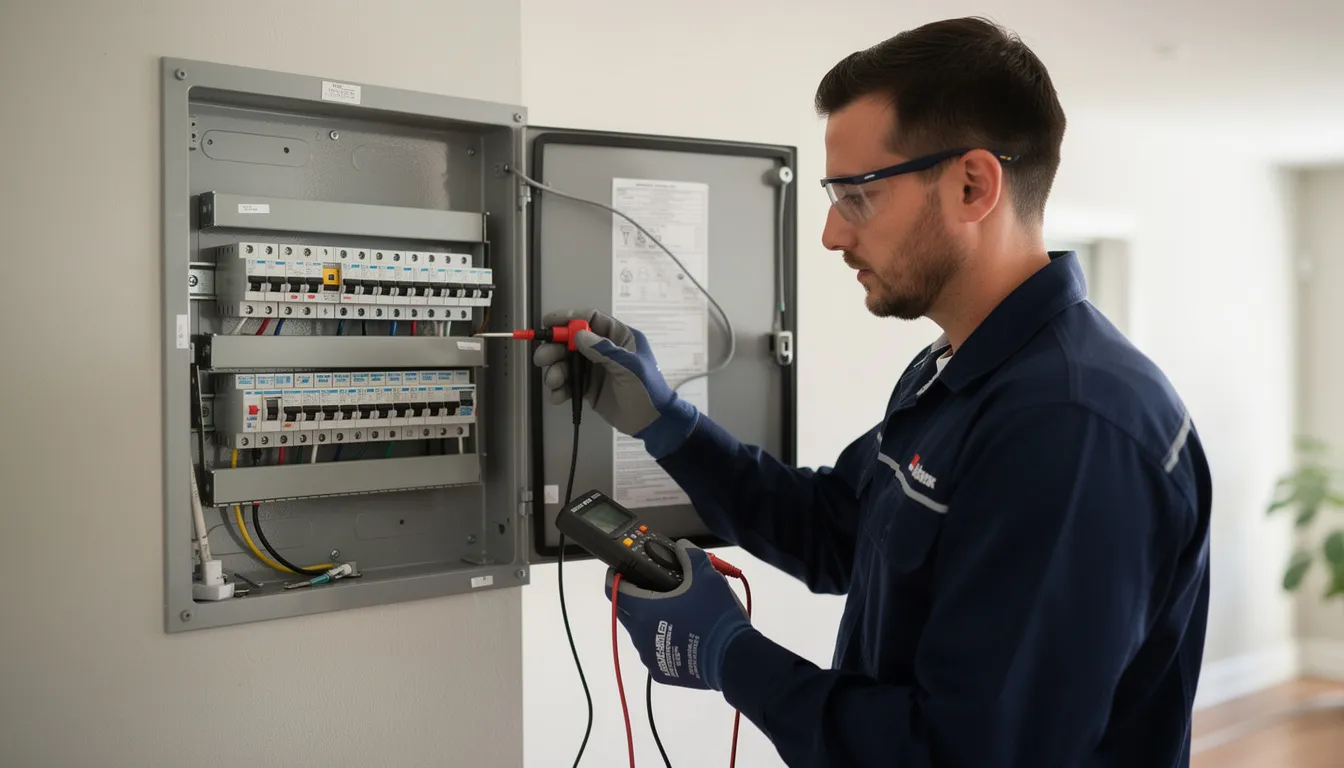
Why Electrical Panel Replacement Matters for Orange County Homeowners
You’re preparing to list your Orange County home when your real estate agent delivers unexpected news: the Federal Pacific panel in your garage could block your sale entirely. Buyers can’t secure homeowner’s insurance, their lender won’t approve financing, and suddenly, your home’s value hangs in the balance. This scenario plays out regularly across Anaheim, Santa Ana, and other established Orange County communities where post-war homes still contain recalled or outdated electrical panels. Frequent breaker trips are a sign that your panel may be outdated and unable to handle modern power demands.
This guide is for Orange County homeowners considering selling or upgrading their home. Understanding the impact of electrical panel replacement on home value and ROI is essential for maximizing your property’s marketability and financial return.
Electrical panel replacement ROI centers on protecting value rather than achieving dramatic value increases. Homeowners typically recover 50-53% of the $1,500-$3,000 installation cost through enhanced resale appeal, faster sales, and avoided negotiation losses. The real return comes from preventing the 5-15% price reductions, insurance denials, and deal cancellations that outdated electrical panels trigger in competitive markets. The home’s electrical system is a critical factor in both safety and value, with the electric panel serving as its core component.
An electrical panel upgrade should be performed by a licensed electrician to ensure safety and compliance with local codes.
This guide covers the complete financial picture of electrical panel upgrades for Orange County homeowners—from appraisal impacts and insurance eligibility to FHA/VA loan requirements and strategic timing. If your home is over 20 years old, it may be time to consider upgrading your electrical panel to meet current safety standards. Whether you’re planning to sell within months or protecting your long-term property value, understanding how your home’s electrical panel affects marketability is essential. We’ll also explore how energy efficiency and energy upgrades, achieved through professional electrical services, can further impact your home’s value.
Key outcomes you’ll gain from this article:
- Realistic ROI expectations that distinguish value protection from value addition
- Understanding of how electrical panels affect appraisals, inspections, and buyer negotiations
- Insurance implications that can make or break your home sale
- Strategic timing guidance for maximum financial benefit
- Orange County-specific market considerations for older homes
Understanding Electrical Panel ROI Reality
Return on investment for electrical panel replacement works differently than kitchen renovations or bathroom upgrades. While those improvements add aesthetic appeal and lifestyle value, panel replacement—often referred to as an electrical panel upgrade—primarily functions as a value protection investment, preventing losses that would otherwise occur during sale, refinancing, or insurance renewal.
Definition of ROI for Electrical Panel Replacement:
Replacing an electrical panel can recoup 50% to nearly 100% of the cost through increased home value. A new electrical panel can yield an ROI of approximately 50% to 80% when selling a home, potentially up to nearly 97%. Modern electrical panels can add $2,000 to $5,000+ in perceived value to a home.
The distinction matters because homeowners expecting a new electrical panel to dramatically increase their asking price may be disappointed. Instead, the ROI manifests through transactions that close on time, buyers who can secure financing and insurance, and appraisals that don’t penalize the property for electrical deficiencies.
In fact, replacing an electrical panel can recoup 50% to nearly 100% of the cost through increased home value.
Value Protection vs. Value Addition
Recalled panels from Federal Pacific Electric and Zinsco create immediate, measurable value threats. These electrical systems, prevalent in homes built between the 1950s and 1980s, fail to trip during overload conditions at rates of 25-50% according to Consumer Product Safety Commission investigations. Insurance companies increasingly deny coverage outright for homes with these panels, and buyers simply cannot close without proof of replacement.
The financial impact extends beyond insurance issues. Home inspectors flag panels over 40 years old in approximately 80% of inspections, triggering buyer requests for $2,000-$4,000 credits or outright walk-aways. In Orange County’s median-priced market of $1.2 million, a deficient electrical system can reduce appraised value by 1-2%—representing $12,000-$24,000 in lost equity.
An upgraded electrical panel prevents these losses entirely. Rather than adding $10,000 to your home’s value, a new panel ensures you don’t lose $10,000 or more through negotiation discounts, insurance complications, or failed transactions.
Typical ROI Ranges for Orange County
Cost recovery for electrical panel upgrades in Orange County typically falls between 50-53% of installation costs through direct resale benefits. A $2,500 panel replacement supports approximately $1,250-$1,325 in protected or enhanced value—but this calculation understates the total benefit.
The complete ROI picture includes:
- Avoided negotiation losses: Homes with flagged electrical panels face 5-10% price reductions during buyer negotiations
- Prevented sale delays: Electrical issues add 30-60 days to closing timelines, costing carrying costs and potentially losing buyers
- Insurance savings: Annual premium reductions of 5-15% after upgrading from problematic panels
- Broader buyer pool: FHA and VA buyers—representing 10-15% of the market—can qualify for financing
Timeline expectations vary based on your selling horizon. Homeowners who upgrade before listing see immediate benefits through cleaner inspections and faster closings. Those upgrading during ownership benefit from reduced insurance costs and enhanced safety for years before capturing resale value.
Home Value Impact Factors
Your electrical panel influences home value through multiple interconnected channels. A well-maintained electrical panel ensures essential appliances operate safely and efficiently, which can positively impact your home’s valuation. Understanding each pathway helps you anticipate how upgrades affect your specific situation—whether you’re selling next month or in 5 years.
Upgrading your electrical panel can also provide more outlets for appliances and devices, reducing the need for power strips.

Appraisal and Inspection Outcomes
Home appraisers evaluate electrical systems as part of their standard Uniform Residential Appraisal Report (URAR). They examine panel capacity, noting whether your home runs on outdated 60-100-amp service or a modern 200-amp system. They check for code compliance, brand reliability, and signs of wear or damage.
A modern electrical panel with 200-amp capacity signals that your home can handle modern electrical demands—supporting HVAC systems, modern appliances, home offices, and EV charger installation without overloaded circuits. Appraisers recognize this capacity as supporting full market value, while deficient panels trigger repair cost deductions.
The appraiser’s findings directly influence lending decisions. When appraisers note electrical deficiencies, lenders may require repairs before closing or reduce the approved loan amount. In Orange County’s competitive market, any obstacle in the financing process can cost you the sale.
Home inspection results create even more immediate pressure. Inspectors specifically flag Federal Pacific Electric and Zinsco panels as major defects, recommending replacement regardless of apparent condition. These findings become negotiation leverage for buyers, who routinely request $3,000-$5,000 credits or demand proof of replacement before removing contingencies.
Buyer Appeal and Market Positioning
Today’s Orange County buyers arrive with sophisticated expectations about electrical systems. Many plan to add EV chargers requiring 40-50 amps of dedicated capacity. Smart home integration demands reliable electrical power throughout the property. Solar panels require a compatible electrical infrastructure for proper connection.
An upgraded panel ensures your home meets these expectations immediately, positioning it favorably against competing listings. In multiple-offer situations—common in Orange County’s fast-moving market—the home without electrical concerns often wins. A home with a new electrical panel signals safety and future-readiness, attracting more buyers and justifying a higher asking price.
Time-on-market differences reflect this buyer preference. Homes with flagged electrical issues average 45 additional days to close due to remediation requirements, inspection negotiations, and insurance complications. That extended timeline costs carrying expenses and risks losing motivated buyers to other properties.
Potential buyers increasingly conduct pre-offer due diligence, asking about panel age and brand before scheduling showings. Frequent use of power strips or extension cords can indicate insufficient electrical outlets, which buyers may see as a red flag for overloaded circuits and safety concerns. A 200-amp modern panel becomes a marketing advantage, while an outdated panel or breaker box becomes a red flag requiring explanation.
Loan Qualification Requirements
Lending institutions impose specific electrical requirements that directly affect your buyer pool. FHA loans require panels meeting National Electrical Code (NEC) standards, typically mandating 200-amp service for homes over 1,800 square feet. VA loans maintain similar requirements, rejecting Federal Pacific and Zinsco panels outright.
These requirements eliminate 10-15% of potential buyers in areas like Orange County with significant veteran populations. When a buyer’s financing falls through due to electrical issues, you restart the sales process with accumulated delays and market skepticism about why your home returned to active listings.
Conventional loans offer slightly more flexibility but still require basic safety compliance. Lenders won’t approve financing for homes presenting obvious fire hazards or code violations. Your panel replacement eliminates this financing obstacle entirely, allowing buyers to choose their preferred loan product without electrical concerns affecting approval.
Insurance Connection and Financial Impact
Insurance eligibility represents perhaps the most underappreciated factor in electrical panel value impact. Without adequate homeowner’s insurance, buyers cannot secure mortgages and sales cannot close. This creates an absolute barrier that no negotiation can overcome.
Recalled Panel Insurance Issues
Insurance companies, including State Farm, Allstate, Farmers, and Liberty Mutual, have established clear policies regarding Federal Pacific Electric and Zinsco panels. Many deny coverage outright. Other non-renewal policies upon inspection discovery. Some impose surcharges of 10-25% that make coverage economically impractical.
The denial rates for homes with recalled panels reach 20-40% in California, forcing affected homeowners toward the California FAIR Plan—a last-resort option with premiums 2-3 times higher than standard coverage. Buyers researching potential purchases quickly discover these insurance complications, often eliminating your home from consideration before ever scheduling a showing.
The fire hazard and safety hazard created by these panels explain insurer reluctance. Federal Pacific breakers fail to trip during overload in 25-50% of test cases, while Zinsco panels experience busbar corrosion leading to overheating and approximately 30% fire risk. No insurance company wants to cover a known risk of electrical fires when safer alternatives exist.
Sale Contingency Complications
When insurance issues surface during escrow, the complications cascade rapidly. Title companies require proof of adequate homeowner’s insurance before releasing funds. Buyers’ lenders mandate insurance as a closing condition. Without coverage, the transaction stalls indefinitely.
This creates a precarious position for sellers. Buyers demand panel replacement as a condition of proceeding, but sellers face pressure to complete work quickly while maintaining leverage in negotiations. Emergency panel replacements cost more and require scheduling flexibility that may not align with closing deadlines.
Timeline delays of 30-60 days become common when insurance complications arise mid-transaction. During this period, buyers may discover other properties, financing terms may change, or carrying costs may accumulate. Many deals simply collapse under the weight of these complications—a preventable outcome with proactive panel replacement.
Beyond Dollar Value: Additional ROI Benefits
Financial returns extend beyond direct resale value into quality-of-life improvements that benefit you during ownership and attract future buyers. Energy savings are a key benefit of upgrading your electrical panel, as improved energy efficiency contributes to long-term cost reductions and enhanced home safety.
Upgrading your electrical panel can significantly improve your home’s energy efficiency, leading to lower utility bills.
Safety and Code Compliance
Modern electrical panels incorporate safety features unknown in older systems. Arc-fault circuit interrupter (AFCI) and ground-fault circuit interrupter (GFCI) breakers prevent approximately 50% of arc-fault fires, according to National Fire Protection Association data. These features also help prevent electrical overloads, which can cause damage and fire risk. These enhanced safety protections reduce electrical fire risk throughout your home.
Current electrical codes—including NEC 2023 requirements for 200-amp service on new installations—reflect decades of safety improvements. An upgraded panel ensures compliance with current electrical codes, eliminating potential liability during sale disclosures and supporting the proper function of all connected systems. Upgrading to a new electrical panel increases the safety of your home by providing more precise circuit protection and accommodating modern safety standards.
The peace of mind value is difficult to quantify but genuinely meaningful. No more dimming lights when major appliances cycle. No tripped breaker interruptions during important work. No burning smells from overworked circuits. Your home’s electrical system simply works as expected, supporting daily life without concern.
Modern Electrical Capacity
Today’s energy demands far exceed what mid-century electrical systems were designed to handle. Upgrading to modern electrical systems with a 200-amp or higher capacity provides more power to support:
- Electric vehicle charging: Level 2 chargers require 40-50 amps of dedicated capacity, with 25% of 2024-2025 home sales involving EV charger considerations
- Smart home integration: Connected thermostats, security systems, and smart electrical panels require reliable electrical power
- Home office equipment: Multiple computers, monitors, and networking equipment demand consistent electrical capacity
- Modern HVAC systems: Heat pump installations and high-efficiency air conditioning require substantial electrical power
- Solar panel integration: Future-proofing for renewable energy requires compatible electrical infrastructure
Modern electrical panels also deliver increased energy efficiency by improving power distribution, reducing energy wastage, and supporting eco-friendly living.
This increased electrical load capacity represents genuine future proofing for technological advancement. Upgrading to a 200-amp panel allows for more appliances and modern technology, making the home future-ready. Eco-conscious buyers increasingly prioritize homes ready for electric vehicles and solar integration, making upgraded electrical capacity a competitive advantage beyond mere adequacy.
Orange County Market Context
Local market conditions shape how electrical panel issues affect your specific situation. Orange County’s housing stock, buyer demographics, and competitive dynamics create particular considerations for homeowners evaluating panel upgrades. The power grid supplies electricity to homes in Orange County, entering through the main breaker in the electrical panel, which then manages and distributes this power safely throughout the home.
Permit processing and electrician availability can impact project timelines. An electrical panel upgrade can range from $4,000 to over $5,000, depending on size and complexity.
Older Home Prevalence
Orange County’s older neighborhoods contain high concentrations of homes requiring electrical attention. Census data indicates approximately 40% of the county housing stock predates 1980, placing these properties in the peak Federal Pacific and Zinsco installation era. In these homes, the power grid enters the property through the main electrical panel or breaker panel, which serves as the central point for distributing electricity throughout the residence.
- Anaheim’s older neighborhoods: Feature post-WWII tract homes built during the Disneyland-era expansion, many still containing original 100-amp panels from the 1950s and 1960s.
- Santa Ana’s historic districts: Include 1920s-1950s construction with fuse box systems and early circuit breaker technology requiring complete modernization.
- Orange’s Old Towne area: Contains charming historic properties with outdated electrical systems that conflict with modern appliances and energy usage expectations.
- Fullerton’s established communities: Reflect mid-century development patterns with 40-60-year-old electrical infrastructure nearing or past typical service life.
These communities attract buyers seeking character and value but requiring electrical upgrades to meet modern home standards for safety and functionality. The average cost of upgrading an electrical panel ranges from $3,000 to $5,000.
Competitive Market Dynamics
Orange County’s median home price of $1.2 million creates buyer expectations matching the investment level. Properties in this price range should not present electrical issues requiring immediate attention or creating insurance complications.
- Average days on market of 20-30 in recent periods indicate a competitive environment where any obstacle can eliminate your property from consideration.
- Experienced electricians report that homes with proactive electrical upgrades sell approximately 30% faster than comparable properties with flagged electrical systems.
Local inspection standards adhere to California Electrical Code requirements with additional Title 24 energy compliance considerations. Permit processing through Orange County jurisdictions typically requires 1-2 weeks, making advance planning essential for pre-listing upgrades.
Licensed electrician availability remains strong in the region, but demand spikes during the spring selling season can extend scheduling timelines. Homeowners planning pre-listing upgrades should contact a professional electrician well before their intended listing date. Local professionals offer a full range of electrical services, including repairs, installations, upgrades, and system diagnostics, ensuring safety and compliance for both residential and commercial properties.
Strategic Timing for Panel Upgrades
When you choose to upgrade significantly affects both the investment return and transaction experience. Different scenarios call for different approaches. Energy upgrades, including panel replacement, can maximize value protection and appeal, especially when completed before listing your home.
Pre-Listing Strategy
Upgrading your electrical panel before listing your home delivers maximum value protection and marketing advantage. You control the timeline, select your preferred licensed electrician, and complete a thorough inspection of the finished work before buyer scrutiny begins. It is crucial to avoid improper installation, as this can lead to serious safety hazards such as electrical fires, legal issues, and system vulnerabilities.
Marketing advantages include listing your property as having updated electrical systems, eliminating a common objection before it arises. Your real estate agent can highlight the upgrade in property descriptions, attracting buyers who specifically seek move-in-ready homes without deferred maintenance concerns.
Pre-listing upgrades eliminate inspection contingency complications entirely. When the home inspector examines your breaker panel, they find a modern system meeting current electrical codes. No negotiation leverage for buyers. No delay requests. No deal uncertainty.
The investment timeline also works in your favor. Completing work 2-4 weeks before listing allows permit finalization, gives systems time to demonstrate proper function, and provides documentation for buyer review. This proactive approach typically saves 2-4% in negotiation losses that reactive sellers face.
Post-Inspection Response
When electrical issues surface during an active sale, your options narrow considerably. Buyers hold leverage knowing the property has documented deficiencies. Time pressure mounts as closing deadlines approach.
Effective response strategies include:
- Immediate contractor contact: Engage a licensed electrician who offers comprehensive electrical services for assessment and a quote within 24-48 hours of receiving inspection results
- Transparent communication: Provide buyers with clear timelines and cost estimates for necessary work
- Escrow accommodation: Consider escrowing funds for completion if the work cannot finish before closing
- Documentation emphasis: Ensure all work includes permits, inspections, and warranties that satisfy buyer and lender requirements
Emergency panel replacements typically command premium pricing and require scheduling flexibility. Experienced electricians can often complete work within 1-2 days once scheduled, minimizing transaction delays, but the rushed timeline creates stress and reduces your negotiation position.
What Modern Buyers Look For
Understanding buyer preferences helps you evaluate which electrical upgrades add the most value for your specific property and target market.
- Capacity matters most: Buyers prioritize 200-amp or higher service capability over panel aesthetics. The ability to add EV charger installation, expand HVAC capacity, or integrate smart home technology without electrical limitations appeals to technology-forward Orange County demographics.
- Brand recognition provides reassurance: UL-listed panels from recognized manufacturers like Square D, QO, and Siemens signal quality and reliability. Buyers and their inspectors specifically check for—and avoid—Challenger, Zinsco, and Federal Pacific branding.
- Safety features attract families: AFCI and GFCI protection throughout the home addresses fire hazard and electrical shock concerns that parents and safety-conscious buyers prioritize. These safety measures demonstrate the homeowner’s attention to important details.
- Solar compatibility appeals to eco-conscious buyers: Infrastructure supporting future solar panel installation attracts buyers planning renewable energy investments. Pre-wired capacity for solar integration adds perceived value even before actual installation.
- Clear documentation builds confidence: Labeled breakers, accessible panels, and complete permit histories demonstrate professional installation and proper maintenance. Buyers appreciate transparency that reduces uncertainty about hidden electrical issues.
Different buyer demographics emphasize different priorities. Young tech professionals focus on EV and smart home capabilities. Families emphasize reducing safety risks. Investors consider operating costs, including lower utility bills from energy-efficient systems. Energy-efficient upgrades, such as modern electrical panels and LED lighting, can reduce electricity costs, which is attractive to buyers. A new electrical panel can lead to a 10-30% saving on monthly electric bills due to improved efficiency. Additionally, modern electrical panels can add $2,000 to $5,000 or more in perceived value to a home. Your panel upgrade strategy should reflect your likely buyer profile.
Conclusion and Next Steps
Electrical panel replacement delivers ROI primarily through value protection—preventing the 5-15% price reductions, insurance complications, and deal failures that outdated panels cause in Orange County’s competitive market. The home’s electrical panel is a core component of your electrical system, essential for supporting modern appliances, ensuring safety standards, and protecting your property’s value. While direct cost recovery averages 50-53%, the complete financial benefit includes avoided negotiation losses, faster sales, reduced insurance costs, and access to the full buyer pool, including FHA and VA borrowers.
Immediate action steps for Orange County homeowners:
- Identify your current panel: Check for Federal Pacific, Zinsco, or Challenger branding, and note panel age (typically stamped on the cover)
- Contact your insurance company: Verify coverage status and inquire about any panel-related surcharges or restrictions
- Schedule a professional assessment: A licensed electrician can evaluate your system’s capacity, condition, and upgrade requirements
- Align timing with your goals: Pre-listing upgrades maximize value protection while ownership upgrades provide safety benefits immediately
For homeowners planning to sell within 12 months, pre-listing panel replacement eliminates inspection surprises and buyer negotiation leverage. For those with longer horizons, upgrading during ownership delivers safety improvements, insurance savings, and increased electrical capacity for immediate benefit. In 2026, buyers prioritize move-in-ready homes capable of supporting high-load technologies, making an upgraded electrical panel even more critical for maximizing home value.
Planning to sell or increase your home’s value? Contact Tradesman Electric for a professional electrical panel assessment that satisfies home inspectors and appraisers. Our team understands Orange County’s specific requirements for real estate transactions and provides the documentation lenders and title companies require.
Frequently Asked Questions
Does replacing an electrical panel increase home value?
Electrical panel replacement typically protects $4,000-$5,000 in home value rather than adding new value outright. The primary benefit comes from preventing appraisal penalties, buyer negotiation discounts, and sale complications that outdated electrical panels cause. In Orange County’s $1.2 million median market, this protection can prevent losses of $12,000-$24,000 on seriously deficient systems.
Will a new electrical panel help my home sell faster?
Yes. Homes with flagged electrical issues experience average delays of 30-60 days compared to properties with compliant systems. A new panel eliminates inspection concerns, insurance complications, and financing obstacles that slow transactions. Real estate professionals report approximately 30% faster sales for homes with proactively upgraded electrical systems.
Do appraisers check electrical panels?
Appraisers evaluate electrical systems as part of standard home value assessments using the Uniform Residential Appraisal Report. They examine capacity (noting outdated 60-100 amp versus modern 200-amp service), brand reliability, code compliance, and overall condition. Deficient panels can reduce appraised value by 1-2% through repair cost deductions.
Can an outdated electrical panel prevent a home sale?
Absolutely. Federal Pacific and Zinsco panels can completely block transactions through insurance denial (20-40% of applications rejected), financing rejection (FHA/VA loans require code-compliant panels), and buyer walkaways when inspectors flag major safety defects. Approximately 15-20% of home sales involve renegotiation over electrical issues.
What electrical panel upgrades add the most value?
Upgrades delivering the greatest value protection include:
- 200-amp service capacity (supporting modern electrical demands)
- AFCI/GFCI breaker protection (addressing fire hazard and shock risks)
- EV charger-ready infrastructure (appealing to electric vehicle owners)
- Solar panel compatibility (attracting eco-conscious buyers)
- Brand quality from manufacturers like Square D and Siemens also supports buyer confidence.
How does electrical panel replacement affect insurance?
Panel replacement can dramatically improve insurance eligibility. Homes with Federal Pacific or Zinsco panels face denial rates of 20-40% and premium surcharges of 10-25%. After upgrading to a modern panel, homeowners typically qualify for standard coverage with potential premium reductions of 5-15% compared to high-risk policies.
Should I upgrade my panel before listing my Orange County home?
Pre-listing upgrades provide maximum benefit in Orange County’s competitive market. You control the timeline, avoid buyer leverage during negotiations, eliminate inspection surprises, and can market your home as having updated electrical systems. This proactive approach typically prevents 2-4% in negotiation losses that reactive sellers experience.
What happens if a home inspector finds electrical panel problems?
Inspection findings trigger buyer negotiation opportunities, typically resulting in $4,000-$5,000 credit requests or demands for replacement before contingency removal. Serious issues like recalled panels may cause buyer walkaways or financing failures. Sellers face pressure to complete costly repairs quickly while maintaining transaction momentum—a stressful scenario avoided through pre-listing upgrades.
Speak with Tradesman Electric’s team about pre-listing electrical upgrades or get a transparent quote for electrical panel replacement. Our licensed electricians understand Orange County’s specific requirements and provide work that meets lending institution and title company standards.